A commercial kitchen can look spotless and still hide serious equipment risks. A frayed power cord may sit behind a range. A slicer guard may be missing one small screw. These details matter. The question “what safety standards apply to commercial kitchen equipment” has no single answer for every kitchen. Requirements depend on the equipment, its installation, and the location. Common references include NSF/ANSI sanitation standards, electrical safety certifications such as UL, fire protection requirements, and applicable local codes. Check the equipment label, manufacturer documentation, and the authority responsible for inspections in your area. A familiar brand name alone does not confirm compliance.
Food safety expert Frank Yiannas has said, “Food safety is everyone’s responsibility.” That principle extends beyond handling ingredients. Equipment condition, cleaning access, safe operation, and staff training all affect daily risks. A mixer with an intact guard is safer to operate; a refrigerator that holds a steady temperature helps protect stored food. Still, a certificate is not a substitute for inspection. Parts wear down. Installations change. And paperwork can be incomplete. This guide explains how to identify relevant standards, verify certifications, inspect key equipment details, and keep useful records. It also leaves room for a practical truth: even careful checks can miss something. Regular follow-up matters.
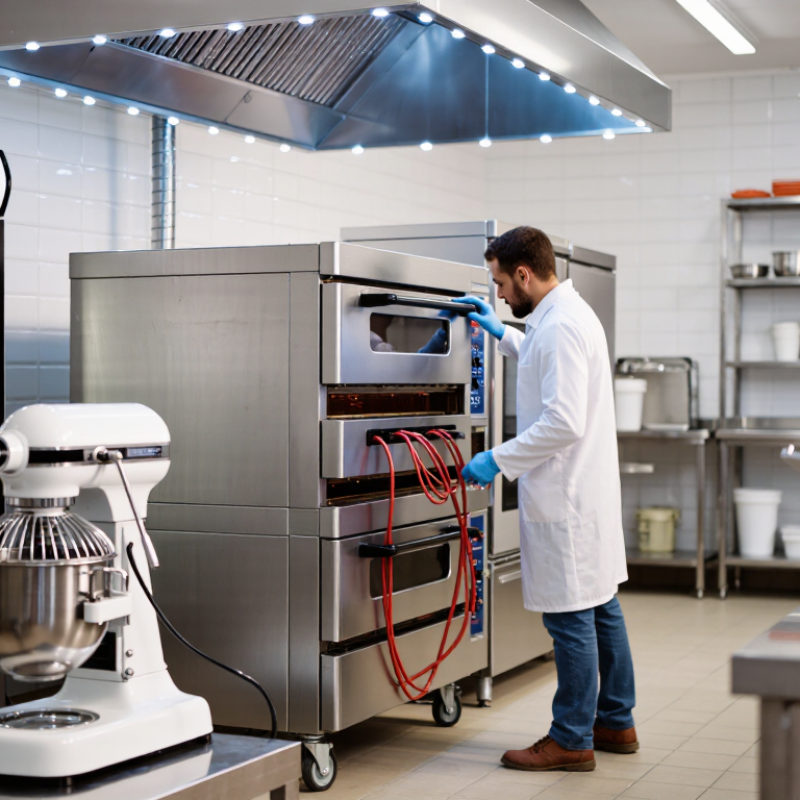
Identifying the applicable safety standards is the most important inspection step. Requirements vary by location, building type, and kitchen activity. A restaurant using gas ranges may face different rules than a bakery using electric ovens. Check local building, fire, electrical, ventilation, plumbing, and food sanitation requirements. The authority having jurisdiction can confirm which editions apply. Do not rely on an old checklist.
Review each appliance’s intended use, power source, installation method, and capacity. Confirm that cooking equipment matches approved ventilation and fire-control systems. Inspect clearances around hot surfaces, accessible shutoff valves, grounding, drainage, and grease removal points. Equipment used near water needs suitable electrical protection. Small details matter. A missing label can delay approval.
Ask for installation records, inspection reports, cleaning schedules, and maintenance logs. Qualified technicians should verify gas connections, electrical loads, exhaust airflow, and emergency controls. I have found that paperwork often looks complete while physical conditions tell a different story. That gap deserves attention. Standards may also change after renovations or equipment replacement, so review them again. When requirements seem unclear, contact the local inspector or a certified safety professional rather than guessing. Safety decisions should reflect the actual kitchen, not a generic template.
How to Check Commercial Kitchen Equipment Safety Standards
Certification labels are a practical starting point when inspecting commercial kitchen equipment. Look for a permanent label showing the testing body, model number, electrical rating, and applicable safety standard. The label should be clear, firmly attached, and consistent with the equipment’s documentation. A faded sticker is not automatically invalid, but it deserves closer checking.
Ask the supplier for the declaration of conformity, installation instructions, maintenance schedule, and inspection records. Compare the model and serial numbers on every document. Small mismatches can indicate an ordering error or an incomplete certification file. Check whether the documents cover the exact configuration, including optional heating elements, gas connections, or control panels. Local authorities may require additional approvals, so confirm current requirements before installation.
I have seen teams trust a familiar-looking label too quickly. That is a mistake. A certification mark alone does not prove safe operation. Inspectors should verify the issuing organization through an independent source, not only a supplier’s website or scanned certificate. Keep dated photographs of labels, test results, and repairs in a central file. Paperwork can be incomplete. Record that uncertainty honestly, then request clarification from a qualified inspector or the equipment manufacturer’s technical representative. Never operate equipment when critical safety information is missing.
Inspect electrical equipment with the kitchen switched off and, where appropriate, unplugged. Look for cracked insulation, frayed cords, loose plugs, scorch marks, or outlets near sinks and wash areas. Keep cables clear of hot surfaces and walkways. Check that equipment is properly grounded and that safety switches or breakers are accessible. A visual check has limits; a qualified technician should investigate damaged wiring or repeated tripping.
For gas appliances, check that hoses are secure, connections show no visible damage, and shutoff valves remain easy to reach. Never use a flame to test for leaks. If you smell gas, leave the area and follow the site’s emergency procedure. Arrange inspection by a qualified gas professional. Small warning signs matter.
Ventilation needs a close look, too. Confirm that extraction hoods capture rising heat and cooking fumes, and check filters for heavy grease buildup. Make sure air inlets are not blocked by boxes or stored utensils. Listen for unusual fan noise and note weak airflow, lingering smoke, or condensation on nearby surfaces. These clues can be easy to dismiss during a busy shift. Record what you find, including the date and equipment location, and report unresolved concerns rather than assuming they will clear up on their own.
How to Check Commercial Kitchen Equipment Safety Standards
Assess Installation, Maintenance, and Operating Conditions
Safe equipment begins with a careful installation check. Confirm that ovens, fryers, and refrigerators sit level and have the clearances their instructions require. Look for pinched power cords, loose plugs, leaking gas connections, or water pooling near electrical equipment. Ventilation hoods should capture rising heat and cooking fumes without blocked filters. Keep access panels reachable. A crowded corner can hide a problem.
Maintenance records help reveal patterns that a quick glance may miss. Check that staff inspect plugs, hoses, guards, and temperature displays on a regular schedule. Note unusual odors, rattling, slow heating, or repeated circuit trips, and take equipment out of service if a fault could expose staff to harm. Repairs should be completed by qualified technicians, with findings recorded clearly. Small details count.
Operating conditions matter just as much. Train employees to use each appliance as intended, avoid overloading outlets, and keep combustible materials away from hot surfaces. Verify that emergency shutoffs are visible and unobstructed. During a shift, observe whether doors close properly and controls respond consistently. A rushed inspection can overlook wear; I have to remind myself that “looks fine” is not a test. Compare observations with equipment instructions and applicable local safety requirements, and document any uncertainty for follow-up.
| Assessment Stage | Equipment or Safety Area | What to Check | Frequency | Records and Corrective Action | Relevant Guidance |
|---|---|---|---|---|---|
| Installation | Equipment approval and suitability | Check the equipment identification plate, installation instructions, and any applicable sanitation or electrical certification. Confirm that the equipment is intended for its location and use. | Before first use and after relocation or major modification | Keep the manual, approval documentation, and installation sign-off. Resolve missing documentation with the installer, authority having jurisdiction, or equipment manufacturer. | Applicable local codes; relevant product standards may include NSF/ANSI 4 for commercial cooking equipment and NSF/ANSI 7 for commercial refrigerators and freezers. |
| Installation | Clearances, stability, and access | Confirm required clearances from combustible materials, secure anchoring where specified, level placement, and unobstructed access to controls, service panels, and emergency shutoffs. | At installation and after equipment is moved | Record measurements or installation checks where required. Correct unsafe placement before operation. | Equipment installation instructions, fire and building codes, and local authority requirements. |
| Installation | Electrical supply and protection | Verify that voltage, phase, circuit capacity, grounding, wiring, and disconnecting means match the equipment specifications. Check that cords and connections are not damaged or exposed to heat, water, or traffic. | At installation; visually check before use | Have electrical work and defects assessed by a qualified person. Do not use equipment with damaged wiring, exposed conductors, or repeated tripping. | Applicable electrical code and OSHA requirements, including 29 CFR 1910 Subpart S where applicable. |
| Installation | Gas connections and shutoffs | Confirm the gas type and supply pressure match the equipment specifications. Check that connections are sound, shutoff valves are accessible, and required ventilation and combustion-air provisions are present. | At installation and after gas-system work | Use a qualified gas technician for installation and leak testing. If gas is suspected, follow the site emergency procedure and do not operate the equipment. | Applicable fuel-gas and fire codes, equipment instructions, and local authority requirements. |
| Installation | Hoods, exhaust, and fire protection | Check that cooking equipment requiring exhaust is correctly positioned under the designated hood. Confirm airflow, grease filters, and fire-suppression coverage are not blocked or altered. | At installation; verify during routine inspections | Document commissioning and service. Arrange inspection or repair by qualified personnel if exhaust or suppression components are missing, damaged, or obstructed. | NFPA 96 and applicable fire codes; requirements depend on the system and local jurisdiction. |
| Maintenance | Guards, interlocks, and emergency stops | Check that guards are installed and secure on mixers, slicers, and other moving equipment. Verify safety interlocks and emergency stops work as designed; never bypass them. | Before use and at scheduled maintenance | Remove unsafe equipment from service until repaired. Record defects and repairs; use lockout/tagout procedures when servicing where required. | OSHA 29 CFR 1910.212 for machine guarding and 1910.147 for control of hazardous energy, where applicable. |
| Maintenance | Cleaning and preventive maintenance | Follow the equipment instructions for cleaning, lubrication, descaling, and service. Check for grease buildup, loose parts, unusual noise, leaks, corrosion, and damaged seals. | According to the cleaning schedule and service plan; inspect routinely | Log completed cleaning and maintenance. Correct leaks or mechanical defects promptly and keep service records. | Equipment instructions, applicable sanitation requirements, and fire-code cleaning requirements for exhaust systems. |
| Maintenance | Fire-suppression system | Check that nozzles, pull stations, seals, and access paths are unobstructed and appear undamaged. Confirm required inspections and servicing are current. | Visual checks routinely; professional inspection at the interval required by the system and local code | Keep inspection tags and service reports. Arrange qualified service if the system is overdue, discharged, damaged, or obstructed. | Applicable fire code and system-specific requirements, including NFPA 17A where applicable. |
| Operation | Pre-use condition | Check for damage, stable placement, clear ventilation openings, clean work areas, accessible shutoffs, and correct operation of controls. Confirm staff know the safe-use procedure. | Before each shift or use | Use a documented opening or pre-use checklist. Tag out equipment that presents an immediate hazard and report it to the responsible supervisor. | Equipment instructions, workplace safety procedures, and applicable occupational-safety rules. |
| Operation | Refrigeration and hot holding | Use a suitable, calibrated thermometer to check food temperatures and verify that equipment maintains the required conditions. Do not rely only on a display or indicator light. | At the intervals set by the food-safety plan and local rules | Record readings and corrective actions. The FDA Food Code model uses 41°F (5°C) or below for cold holding and 135°F (57°C) or above for hot holding; adopted local requirements may differ. | FDA Food Code model provisions; check the current food code adopted by the local jurisdiction. |
| Operation | Incident response and return to service | Stop use after an electrical shock, gas odor, fire, failed guard, abnormal overheating, or other serious malfunction. Follow emergency procedures and isolate energy only when safe to do so. | Whenever a hazard or malfunction is identified | Report and document the incident. A qualified person should inspect and repair the equipment before it is returned to service. | Site emergency procedures, applicable OSHA requirements, fire codes, and equipment instructions. |
Note: Standards and code requirements vary by location, equipment type, and adopted code edition. Confirm applicable requirements with the local authority having jurisdiction and qualified installation or service professionals.
A safety inspection is useful only when its findings can be verified later. In a commercial kitchen, I record each item beside its exact location, equipment number, and inspection date. I photograph damaged cords, missing guards, blocked exits, and grease buildup when permitted by site policy. Clear evidence prevents vague reports such as “machine unsafe.” It also helps maintenance staff understand the risk without guessing. I note operating conditions because a quiet appliance may fail once heated or loaded. Small details matter.
Each result receives a status: compliant, observation, or corrective action required. I describe the hazard, possible consequence, responsible person, and target completion date. A loose plug may need replacement, while a failed temperature control may require the unit to be removed from service. Do not hide uncertainty. If a test was incomplete, I record that limitation and arrange a qualified follow-up. I have learned that rushed forms create false confidence. One missing signature can weaken an otherwise careful inspection.
After repairs, the original inspector or another competent person checks the same point again. The record should show what changed, when it changed, and whether the control works under normal use. I compare readings with manufacturer instructions, site procedures, and applicable safety requirements. Keep reports secure but accessible to managers and trained workers. Review repeated failures monthly; they may reveal poor cleaning routines, unclear training, or aging equipment. Corrective action is not finished until evidence supports closure.
Switch off and unplug equipment when appropriate. Look for cracked insulation, frayed cords, loose plugs, scorch marks, and outlets near water. Keep cables away from hot surfaces and walkways.
Leave the area and follow the site emergency procedure. Never use a flame to check for leaks. Have a qualified gas professional inspect the appliance and connections.
Check whether the hood captures heat and fumes. Look for grease-heavy filters, blocked air inlets, unusual fan noise, weak airflow, lingering smoke, or nearby condensation.
Check that ovens, fryers, and refrigerators sit level and have required clearances. Look for pinched cords, leaks, pooled water, blocked filters, and unreachable access panels.
Note unusual odors, rattling, slow heating, repeated circuit trips, or controls that respond inconsistently. Remove equipment from service when a fault could harm staff.
Record the equipment number, exact location, date, findings, responsible person, and target completion date. Photos can help, when site policy permits. Be specific.
Record uncertainty and arrange follow-up with a qualified person. A visual check has limits; “looks fine” is not a reliable test.
Recheck the repaired item under normal use and document what changed. Closure needs evidence. Repeated failures may point to training, cleaning, or aging equipment.
Checking commercial kitchen equipment safety standards begins with identifying what safety standards apply to commercial kitchen equipment in the facility’s location, equipment category, and intended use. Review relevant workplace, electrical, gas, fire, sanitation, and ventilation requirements, then verify that each appliance has clear certification labels, inspection marks, manuals, and compliance documents. Missing or unclear records should be treated as a reason for further review before the equipment is used.
A complete inspection should cover power connections, grounding, gas lines, shutoff valves, ventilation, heat protection, emergency controls, and visible signs of damage or wear. The equipment must also be installed correctly, maintained according to documented procedures, and operated only under suitable conditions by trained staff. Record inspection dates, findings, responsible personnel, and corrective actions. Any safety gap should be addressed promptly through qualified servicing, replacement of damaged components, updated training, or removal of unsafe equipment from operation until it meets applicable requirements.

Chef Nest Kitchen